










Solar Power Kits
Solar Power Kits
Business Model Description
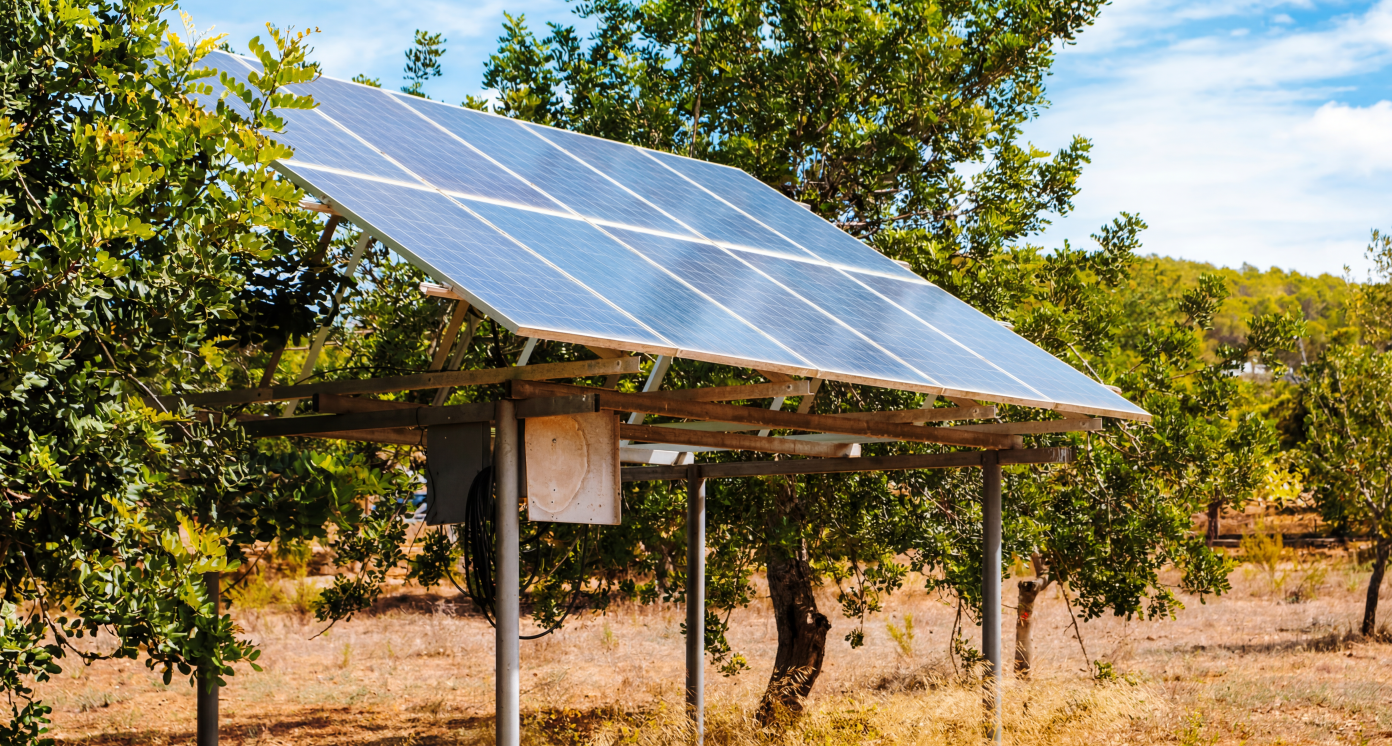
Distribute solar power kits to provide access to electricity to communities not connected to the electricity grid. They acquire the solar power kits on the basis of a moderate monthly payment for a service including the installation and maintenance of the kits. Take advantage of state subsidy provided through Togo's rural electrification programme, CIZO, which is managed by the Togolese Agency for Rural Electrification and Renewable Energy (AT2ER).
Expected Impact
Provide low-cost electricity and improve educational conditions in communities not connected to the grid.
How is this information gathered?
Investment opportunities with potential to contribute to sustainable development are based on country-level SDG Investor Maps.
Disclaimer
UNDP, the Private Finance for the SDGs, and their affiliates (collectively “UNDP”) do not seek or solicit investment for programmes, projects, or opportunities described on this site (collectively “Programmes”) or any other Programmes, and nothing on this page should constitute a solicitation for investment. The actors listed on this site are not partners of UNDP, and their inclusion should not be construed as an endorsement or recommendation by UNDP for any relationship or investment.
The descriptions on this page are provided for informational purposes only. Only companies and enterprises that appear under the case study tab have been validated and vetted through UNDP programmes such as the Growth Stage Impact Ventures (GSIV), Business Call to Action (BCtA), or through other UN agencies. Even then, under no circumstances should their appearance on this website be construed as an endorsement for any relationship or investment. UNDP assumes no liability for investment losses directly or indirectly resulting from recommendations made, implied, or inferred by its research. Likewise, UNDP assumes no claim to investment gains directly or indirectly resulting from trading profits, investment management, or advisory fees obtained by following investment recommendations made, implied, or inferred by its research.
Investment involves risk, and all investments should be made with the supervision of a professional investment manager or advisor. The materials on the website are not an offer to sell or a solicitation of an offer to buy any investment, security, or commodity, nor shall any security be offered or sold to any person, in any jurisdiction in which such offer would be unlawful under the securities laws of such jurisdiction.
Country & Regions
- Togo: Maritime
- Togo: Centrale
- Togo: Plateaux
- Togo: Kara
- Togo: Savanes
Sector Classification
Infrastructure
Development need
The electricity access rate in Togo was 58.1% in 2021; Lomé and Grand Lomé had an access rate of 70%, and the Maritime region had an access rate of 47.1% (1, 2). Other regions experience lower electrification rates in 2021 (e.g. Central 12.9%; Kara 15.2%; Plateaux 10.3%; and Savanes 7.7%) and the country seeks to provide the entire population with access to affordable electricity by 2030 (2).
Policy priority
Togo's priority is both to furnish supply of energy to the population at a reduced cost and to support socio-economic development, to ensure the “continuation of the electrification policy for all” (1, 3). The Government's priority in the energy sector is the extension of the network and the deployment of decentralized systems to achieve 75% electrification by 2025 (3).
Gender inequalities and marginalization issues
Vulnerable populations often find themselves marginalized in underserved peripheral areas, with limited access to basic services incl. electricity, water and sanitation. The poorest populations, including a high proportion of women who are most exposed to a lack of electricity, live in the following regions: Savanes, Plateau, Central and Kara (2).
Investment opportunities introduction
Economic advances, growing urbanization and demographic expansion are driving the field of electricity (4). The development of solar energy is favoured by public authorities through solar power plant construction projects. The production of electricity through renewable energies presents significant investment opportunities for the private sector (3, 22).
Key bottlenecks introduction
The electricity sector is non-competitive and its activities are subject to prior concessions authorized by the public authorities (4). The pricing policy leads companies in the sector to charge electricity sales prices that are lower than the cost of production, while consumers bear higher access costs than the competition could offer (21).
Utilities
Development need
The share of Togo's renewable energy is limited, representing only 30% (2022) in the energy mix (23). The methods of using electricity in buildings, housing, factories and infrastructure lead to energy losses, which can be limited or avoided. The Lomé electricity network is experiencing deficiencies, causing significant technical and commercial losses (24).
Policy priority
Togo has committed to increasing the supply of renewable energy in the energy mix through the construction of solar power plants (23). It has also committed to limiting losses in the Lomé electricity network by extending the low-voltage distribution network of the Compagnie Energie Electrique du Togo in the region and connecting households with connection kits (26, 27).
Gender inequalities and marginalization issues
Men and women in Togo are not affected in the same way by the energy deficit. Men are concentrated in activities that use more electricity than women who mainly use thermal energy. In terms of women's participation in electricity production, transmission and marketing activities, the companies and institutions in charge of these activities employ few women (27).
Investment opportunities introduction
The envisaged approach includes the stimulation of consumption and the increase in local production to reduce imports estimated at 60%, and ensure access to electricity to all by 2030 (6). It also involves strengthening electricity transmission infrastructure by modernizing the distribution network and reducing service interruptions (28).
Key bottlenecks introduction
Local electricity production faces profitability problems, but also network insufficiency. It is not certain that private initiatives to set up new large solar production capacities will be integrated into the network infrastructures. The financial and regulatory framework for mini-grids would still be insufficient despite the reforms carried out (6).
Electric Utilities and Power Generators
Pipeline Opportunity
Solar Power Kits
Distribute solar power kits to provide access to electricity to communities not connected to the electricity grid. They acquire the solar power kits on the basis of a moderate monthly payment for a service including the installation and maintenance of the kits. Take advantage of state subsidy provided through Togo's rural electrification programme, CIZO, which is managed by the Togolese Agency for Rural Electrification and Renewable Energy (AT2ER).
Business Case
Market Size and Environment
< USD 50 million
The number of solar kit subscribers increased from 27,001 in 2019 to 78,109 in 2021 and to 106,767 in 2022. At a market price of USD 8 / month, annual sales increased from USD 2,592,096 in 2019, to USD 7,498,464 in 2021 and USD 10,249,632 in 2022. The strong growth between 2019 and 2022 highlights the extent of the solar kit market for populations not connected to the electricity grid (32, 36).
Indicative Return
15% - 20%
MOON, which offers sale, installation and maintenance of solar kits by charging the end user, shows that a profit margin of at least 15% is necessary to ensure the profitability of such an intervention. With regards to end consumers, MOON's customers have access to credit at an interest rate of 8% thanks to its partner Solylend, which allows the purchase of solar kits (33).
The project of the promoter company (EP-GROUP) for the production and marketing of solar kits declares an investment of $203,063 for a recovery period of the invested capital of 5 years and months, i.e. an approximate rate of return of 18% (37).
Investment Timeframe
Medium Term (5–10 years)
The project of the promoter company (EP-GROUP) created in 2017 indicates for the production and marketing of solar kits a total investment of USD 203,063 for a recovery period of the invested capital of 5 years and months (37).
Ticket Size
< USD 500,000
Market Risks & Scale Obstacles
Capital - Requires Subsidy
Business - Supply Chain Constraints
Market - Highly Regulated
Impact Case
Sustainable Development Need
Despite progress made in recent years, access rate to electricity for the population in Togo was limited to 58.1% in 2021 (1). In the same time, share of renewable energies in the energy mix was still limited to 30% in 2022 in Togo. The country plans to increase this share to 50% in 2025 (9).
Except for Greater Lomé, Togo's regions suffer from a very significant access deficit of electricity (2). In the Savanes region, the electrification rate was 33% in 2023. Over the same period, the coverage of the Kara region was 44% and 39% in the Plateaux region (7).
Energy consumption in Togo is characterized by the significant share of biomass compared to other energy sources. The biomass energy, which includes charcoal, wood and agricultural waste, was consumed at 87% by households in Togo, mainly for cooking and heating, particularly in rural areas (8).
Gender & Marginalisation
Employment of women in companies that distribute solar kits is still limited, while training includes more women; such as the program to train 500 people in solar energy, 85% of whom are women (38).
The barriers to women’s entry into private sector energy companies are due mainly to their lack of professional training (5). Regions other than Grand Lomé and Maritime have less access to electricity (7).
Young girls and boys do not benefit from technical training adapted to new needs and technological innovations such as those linked to solar energy (17).
Expected Development Outcome
Solar power kits will permit to vulnerable populations to access to electricity at affordable conditions and sustainably, including those living far of the electric grid.
Solar power kits will increase the electricity offer, including renewable energy, and hence permit to reduce the import of electricity and to meet the needs of the country's large market for electricity.
Solar power kits will constitute an accelerator for the training of young people, girls and boys in solar energy and the installation and maintenance of said kits.
Gender & Marginalisation
Solar power kits will increase employment across the electricity value chain, including increasing the participation of women at all levels of the electricity sector.
Solar power kits will offer women trained in solar the opportunity to access jobs in the maintenance and assembly of solar kits.
Solar power kits will allow women to undertake artisanal processing activities of agricultural and fishing products or other services and thus earn high incomes.
Primary SDGs addressed
7.1.1 Proportion of population with access to electricity
58,1% in 2021 (1).
N/A
4.4.1 Proportion of youth and adults with information and communications technology (ICT) skills, by type of skill
3.3% in 2022 (15).
N/A
Secondary SDGs addressed
Directly impacted stakeholders
People
Gender inequality and/or marginalization
Planet
Corporates
Public sector
Indirectly impacted stakeholders
People
Gender inequality and/or marginalization
Planet
Public sector
Outcome Risks
Disposal of solar power kits may have negative environmental impacts if components are not properly disposed and recycled.
The supply of electricity through solar power kits while offering undeniable services to populations will have to collect defective solar kits to avoid environmental damage.
Impact Risks
The solar power kits could offer limited job opportunities to young girls and boys in areas served by lack of training in solar energy professions.
The solar power kits could see their operationality affected by unfavourable weather conditions, limited sunshine and/or prolonged rains.
Gender inequality and/or marginalization risk: The supply of electricity through solar power kits could have a limited social impact for non-extension to schools in covered areas.
Impact Classification
What
Providing solar power kits to enable off-grid populations to access electricity contributes to improving the well-being of these populations.
Who
Private companies, the State, local authorities and the planet benefit from the supply of electricity to off-grid communities through the distribution of solar kits.
Risk
The impact of the solar power kits could be reduced to do limited job creation among those most in need, unfavourable weather conditions to ensure functionality, and not reaching critical institutions.
Impact Thesis
Provide low-cost electricity and improve educational conditions in communities not connected to the grid.
Enabling Environment
Policy Environment
Togo's action in terms of sustainable energy is part of as part of the Sustainable Energy for All (SE4ALL) initiative, including National Energy Efficiency Action Plan (2015-2020-2030). Togo's action plans aim to increase the share of renewable energy in the energy mix by 2020 and 2030 (33).
The regulation of the sector is ensured by the Electricity Sector Regulatory Authority, which participates in the promotion of renewable energies (11). In this perspective, the aim is to increase the share of renewable energy in the country's energy mix from 30% (2022) to 50% in 2025 (23).
The CIZO project, managed by the Togolese Agency for Rural Electrification and Renewable Energy (AT2ER), aims to provide electricity to 300,000 households within 5 years, or 2 million inhabitants; equip 3,000 small farms with individual solar kits for irrigation; and facilitate market access for private distributors of solar kits 39).
The CIZO project aims also to offer digital payment services (mobile money) to rural populations using individual solar kits as sources of electricity; create 5 training centers specialized in solar energy in the 5 regions of Togo; and set up subsidies for disadvantaged rural households (25%) (39).
Financial Environment
Financial incentives: Art 35 of Law No. 2018-010 of 08/08/18 establishes tax and customs exemptions for projects to build power plants and electricity production infrastructures based on renewable energy sources used for the needs of the operator for selling electricity for domestic needs, including solar power kits (4).
Fiscal incentives: Togo offers tax benefits through the Investment Code, including VAT exemptions, customs duties, levies on deposits collected on imports such as corporate tax, personal income tax when the project is eligible, as could be the case for solar power kits (13, 18).
Financial incentives: The CIZO program provides a 50% subsidy to cover the costs of the kit installed at the customer's premises, who only pays a small amount for the operation and maintenance of the solar systems (32).
Regulatory Environment
Togo adopted Law No. 2018-010 of 08/08/18 relating to the promotion of electricity production based on renewable energy sources in Togo. Promoting electricity production based on renewable energy sources concerns domestic and industrial needs (10).
Law No. 2018-010 of 08/08/18 relating to the promotion of electricity production based on renewable energy sources in Togo envisages an incentive framework favourable to the purchase and sale of electricity from renewable energy sources (10).
Public investments to be considered in support of off-grid solutions: viability subsidies (for mini-grids, and the most vulnerable segments for solar kits), targeted subsidies for public services and national priorities (e.g. schools, medical centers, agricultural support programs, etc.) (18).
Marketplace Participants
Private Sector
EWARE-Electrical Work And Renewable Energy Group; EZO-Energie du future; The Renewable Energy Technologies Company (Soter) (30). Company Sun King provides domestic solar panels (31). MOON sells, installs and maintains solar kits in local communities (32).
Government
Ministry of Mines and Energy; Ministry of the Environment, Sustainable Development and Nature Protection; Electricity Sector Regulatory Authority; Togolese Agency for Rural Electrification and Renewable Energy (AT2ER) (11).
Multilaterals
African Development Bank (AfDB), ECOWAS Investment and Development Bank, West African Development Bank, European Union (EU), International Finance Corporation (IFC), United Nations Industrial Development Organization (UNIDO), and United Nations Development Programme (UNDP) (12).
Non-Profit
Community Action for Integral and Solar Development; Alliance for Rural Electrification; Association for the Promotion of Renewable Energy in Togo; MIVO Energie; Network of Renewable Energy Professionals; URBIS Foundation: URBIS Promotion of Renewable Energies (12).
Public-Private Partnership
Under CIZO project, several PPPs provide electricity to households in the most remote rural areas using off-grid technology, with the marketing of individual solar kits. Another PPP concerns the Blitta photovoltaic plant installed with funds from West African Development Bank and Abu Dhabi Fund for Development (40).
Target Locations

Togo: Maritime
Togo: Centrale
Togo: Plateaux
Togo: Kara
Togo: Savanes
References
- (1) Togo, Rapport volontaire national (VNR), 2021
- (2) SNC-Lavalin, juillet 2014. Elaboration du plan directeur du développement des infrastructures d’énergie électrique du Togo Financement AFD FERC CTG 1147 Compagnie Energie Electrique du Togo (CEET), https://rise.esmap.org/data/files/library/togo/Electricity%20Access/Togo_Infrastructure%20development%20master%20plan%20CEET.pdf
- (3) Togo, Feuille de Route Gouvernementale Togo 2025
- (4) Loi n° 2018-010 du 08/08/18 relative à la promotion de la production de l’électricité à base des sources d’énergies renouvelables au Togo. 2018-08-08 ; Loi n° 2000-012 relative au secteur de l'électricité. 2000-07-18
- (5) République Togolaise, Plan d’Action National 2020-2024 À l’Energie de la CEDEAO, Février 2020, http://www.ecowrex.org/system/files/national_action_plan_on_gender_and_energy_policy_togo.pdf
- (6) World Banque Group, DIAGNOSTIC DU SECTEUR PRIVÉ (CPSD) CRÉER DES MARCHÉS POUR LE TOGO, Stimuler la transformation économique avec des réformes axées sur le secteur privé, avril 2023, https://www.ifc.org/content/dam/ifc/doc/2023-delta/cpsd-togo-fr.pdf
- (7) Togo First Togo: le taux d’électrification en progression dans les Savanes, la Kara et les Plateaux, https://www.togofirst.com/fr/energies/1203-13637-togo-le-taux-d-electrification-en-progression-dans-les-savanes-la-kara-et-les-plateaux
- (8) African Union, AFREC, https://au-afrec.org/fr/togo#:~:text=Selon%20le%20bilan%20%C3%A9nerg%C3%A9tique%20de,2018%20%C3%A9tait%20de%20563%20ktep.
- (9) Media Top News Transition vers les énergies renouvelables: le Togo et l’énergie renouvelable, une longue histoire d’amour, https://mediatopnews.tg/?p=2651#:~:text=Le%20taux%20d%27%C3%A9lectrification%20du,%C3%A9tablie%20%C3%A0%2030%25%20en%202022
- (10) République Togolaise, Plan Actions National d'Efficacité Énergétique (PANEE) Togo pour la période 2015-2020-2030, https://www.se4all-africa.org/fileadmin/uploads/se4all/Documents/Country_PANEE/Togo_Plan_d_Actions_National_d%E2%80%99Efficacite%CC%81_Energe%CC%81tique.pdf
- (11) ARSE Electricity Sector Regulatory Authority, https://www.arse.tg/reseaux-2/electricite/les-acteurs/#:~:text=la%20Compagnie%20Energie%20Electrique%20du%20Togo%20(CEET)
- (12) Répertoire, Acteurs du secteur des énergies renouvelables au Togo, https://www.ruralelec.org/wp-content/uploads/2023/11/2021-05-14-Togo-Phone-Book-Final.pdf
- (13) Togo, Loi n°2019-005/PR du 25 janvier 2019 portant Code des Investissements en République Togolaise, https://commerce.gouv.tg/wp-content/uploads/2020/09/CODE-DES-INVEST-TOGO-compressed-compressed-compressed.pdf
- (14) Togo, LOI N° 2011- 018 PORTANT STATUT DE ZONE FRANCHE INDUSTRIELLE, https://investirautogo.tg/media/loi%20n%C2%B02011-018%20portant%20statut%20de%20zfi.pdf
- (15) United Nations Department of Economic and Social Affairs Statistics Division, Country Profiles, https://unstats.un.org/sdgs/
- (16) Economic and Social Council Report of the Inter-Agency and Expert Group on Sustainable Development Goa20) 7l Indicators E/CN.3/2016/2/Rev.1* https://documents.un.org/doc/undoc/gen/n16/045/25/pdf/n1604525.pdf
- (17) Agence Ecofin Au Togo, le gouvernement lance “Tutudo” pour recruter 500 jeunes à former dans le secteur de l’énergie https://www.agenceecofin.com/energie/2504-118173-au-togo-le-gouvernement-lance-tutudo-pour-recruter-500-jeunes-a-former-dans-le-secteur-de-l-energie
- (18) Stratégie d’électrification du Togo, Document de présentation, mai 2018 https://rise.esmap.org/data/files/library/togo/Electricity%20Access/Togo_Electrification-Strategy-Short-EN-Final_2018.pdf
- (21) Groupe de la BAD, Problématique de l’accès à l’électricité au Togo Carpophore NTAGUNGIRA Note 03 | Septembre 2015, https://www.afdb.org/fileadmin/uploads/afdb/Documents/Knowledge/Afrique_de_l_ouest_Policy_Note_03_-_septembre_2015.pdf
- (22) Ministère Délégué auprès du Président de la République Chargé de l'Energie et des Mines, Projets, https://energies.gouv.tg/projets/
- (23) Togo, Réveil Le taux d'électrification s'accroit au Togo grâce aux énergies renouvelables, https://togoreveil.com/singlepost-u-31-5478
- (24) Ministère Délégué auprès du Président de la République Chargé de l'Energie et des Mines, https://energies.gouv.tg/projet/volet-extension-du-priset-finance-par-la-banque-mondiale/
- (25) ledito Togo – Jeunes Verts : kits solaires dans 10 écoles et 3 villages, 2600 écoliers et enseignants engagés https://ledito.tg/togo-jeunes-verts-kits-solaires-dans-10-ecoles-et-3-villages-2600-ecoliers-et-enseignants-engages/
- (26) Ministère Délégué auprès du Président de la République Chargé de l'Energie et des Mines, https://energies.gouv.tg/projet/volet-extension-du-priset-finance-par-la-banque-mondiale/
- (27) Ministère Délégué auprès du Président de la République Chargé de l'Energie et des Mines, https://energies.gouv.tg/projet/volet-extension-du-projet-dextension-du-reseau-electrique-de-lome-perel/
- (28) Togo first Énergie: ce que compte faire le Togo avec le Compact du MCC, https://www.togofirst.com/fr/energies/2901-13343-energie-ce-que-compte-faire-le-togo-avec-le-compact-du-mcc
- (29) Compagnie Energie Electrique du Togo, https://www.ceet.tg/tg/?page_id=53#:~:text=La%20Compagnie%20d%27Energie%20Electrique,la%20Basse%20Tension%20(BT).
- (30) ENF Installateurs de panneaux solaires, https://fr.enfsolar.com/directory/installer/Togo
- (31) Togo Off-Grid: Sun King développe son réseau, https://www.republicoftogo.com/toutes-les-rubriques/eco-finance/off-grid-sun-king-developpe-son-reseau
- (32) Solylend : MOON L’accès universel et durable à l’énergie pour les communautés rurales du Togo, https://solylend.com/fr/projets/37-moon-l-acces-universel-et-durable-a-l-energie-pour-les-communautes-rurales-du-togo#:~:text=rurales%20du%20Togo-,MOON%20%2D%20L%27acc%C3%A8s%20universel%20et%20durable%20%C3%A0%20l%27%C3%A9nergie,et%20rembours%C3%A9s%20en%2036%20mois.
- (33) AT2ER, PNUD, Rapport annuel 2022 du projet d’accélération de l’accès aux énergies renouvelables pour l’autonomisation économique des populations économiques en milieu rural au Togo, https://www.undp.org/sites/g/files/zskgke326/files/2023-03/Rapport%202022-Projet%20acces%20Energies%20Renouvellables14032023.pdf
- (34) URBIS Foundation, Promotion des femmes dans le secteur solaire à Lomé, Togo, https://urbis-foundation.de/fr/actualit%C3%A9s_/promotion-des-femmes-dans-le-secteur-solaire-a-lome-togo.html
- (35) Togo TOPNEWS, Accès accru des populations à l’électricité: le fonds Tinga lancé à Sokodé et à Blitta, https://togotopnews.tg/2024/03/12/acces-accru-des-populations-a-lelectricite-le-fonds-tinga-lance-a-sokode-et-a-blitta/
- (36) Présidence de la République, Ministère délégué chargé de l’énergie et des mines, Système énergétique du Togo SIE Togo Rapport 2023 (bilans 2019 2020, 2021 et 2022), https://eis.ecowas.int/assets/front/medias/doc/media_20240515120415.pdf
- (37) Apizf Agence de Promotion des Investissements et de la Zone Franche eopportunities Togo, https://projets.investirautogo.tg/opportunities/opportunity/production-et-commercialisation-des-kits-scolaires
- (38) VertTogo, Le gouvernement Togolais recherche 500 Jeunes et Femmes pour une formation en énergie solaire et éclairage public. https://vert-togo.tg/le-gouvernement-togolais-recherche-500-jeunes-et-femmes-pour-une-formation-energie-solaire-et-eclairage-public/
- (39) Ministère des Mines et des EnergiesAgence Togolaise d'électricité rurale et des énérgies reouvelables (AT2ER), Projet d’Electrification Rurale CIZO http://www.ecowrex.org/sites/default/files/documents/projects/togo_projet_cizo-resume-cpr.pdf
- (40) Horizon new Énergies renouvelables : Des exemples de succès avec les partenariats public-privé au Togo https://horizon-news.net/index.php/component/k2/item/2167-energies-renouvelables-des-exemples-de-succes-avec-les-partenariats-public-prive-au-togo